How to Prep a Garage Floor Before Epoxy in Perth
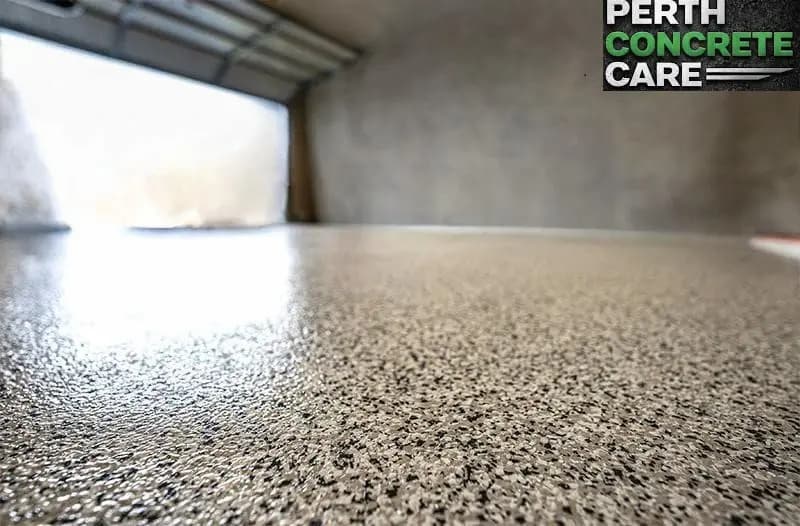
A garage epoxy floor is only as good as the slab underneath it. We get called out to fix peeling, bubbling and flaking floors all the time, and it almost always traces back to one thing: the prep was rushed or skipped. Get the preparation right and a flake or epoxy floor lasts for years. Get it wrong and it lets go, no matter how good the coating is. Here's how we prep a Perth garage properly, step by step.
Step 1: Clear and clean the slab
Everything comes out, and the bare slab gets a thorough clean to remove oil, dust and loose material. Oil stains matter, because epoxy will not bond through them, so any contaminated patches are degreased or ground out. This is also when we spot what we're really dealing with, such as old paint, a previous sealer, or a slab that's been coated before.
Step 2: Check the slab for moisture
On a new build, or any slab on ground without a working vapour barrier, moisture can push up through the concrete and lift a sealed coating off later. For those slabs we test first, and if it reads high we use a moisture barrier or suppression coating before anything else. There's a full breakdown in our concrete slab moisture testing guide.
Step 3: Repair cracks and damage
Cracks, spalling and pitting are fixed before the floor goes down, not coated over. We inject cracks with a two-part epoxy resin and rebuild any broken areas, then grind them flush so the surface is sound and level. A coating bridged over an untreated crack will split there before long. Our concrete repair page covers this in more detail.
Step 4: Diamond grind to the right profile
This is the step that makes or breaks the floor. We mechanically grind the slab with diamond tooling to open it up and create the correct concrete surface profile (CSP) so the coating can key into the concrete. For epoxy and flake systems that's typically a CSP 2 to CSP 3 profile. We grind, not acid-etch, because grinding is consistent, removes old coatings and gives a reliable bond. It's the core of our concrete grinding and prep service, all done with H-class dust extraction.
Step 5: Vacuum, then prime
A freshly ground slab has to be vacuumed properly, because a coating bonds to clean concrete, not to a layer of fine dust. Once it's clean we apply the right primer for the system and the slab condition, which locks everything together and gives the flake or epoxy coat the best possible base.
Step 6: Then, and only then, the floor goes down
With the slab clean, dry, repaired, profiled and primed, the actual coating goes on. Because the prep is right, the flake broadcast and topcoat bond hard and cure the way they should. The finish everyone sees is the easy part. The prep no one sees is what makes it last.
Why DIY prep usually fails
The kits look simple, but the two things that sink most DIY garage floors are acid etching instead of grinding, and skipping the moisture check. Etching can't match the profile or cleanliness of a mechanical grind, and an untested slab that's pushing moisture will lift the best coating on the market. That's why nearly every failed floor we're asked to strip and redo was a coating problem caused by a prep shortcut.
Want a garage floor that actually lasts?
We prep and coat garage floors right across Perth. Send the size and a few photos of your slab and we'll give you a fixed written quote.
Frequently asked questions
Can I just acid-etch my garage floor instead of grinding?
We don't recommend it. Acid etching is inconsistent, leaves residue that can stop coatings bonding, and it won't remove old paint or sealer. Diamond grinding gives a clean, even, correctly profiled surface every time, which is why coating manufacturers specify it for their warranties.
Do I really need a moisture test on a garage slab?
For a new build or a slab on ground with no working vapour barrier, yes. Moisture pushing up through the slab is a common cause of epoxy bubbling and peeling, and most manufacturer warranties require a test. We cover this in our slab moisture testing guide.
How long does garage floor prep take?
For a typical single or double garage, grinding and prep is usually done in a day, sometimes alongside the coating if there's no heavy removal or moisture mitigation needed. Crack repair, old-coating removal or moisture barriers add time, which we confirm when we quote.
How soon can I park on the new floor?
With a fast-cure polyaspartic topcoat, light foot traffic is usually fine the next day and vehicles after around 72 hours, depending on temperature and the system used. Good prep is what makes those cure times hold up over the years.