Cleaning and Resealing Honed and Exposed Aggregate Concrete
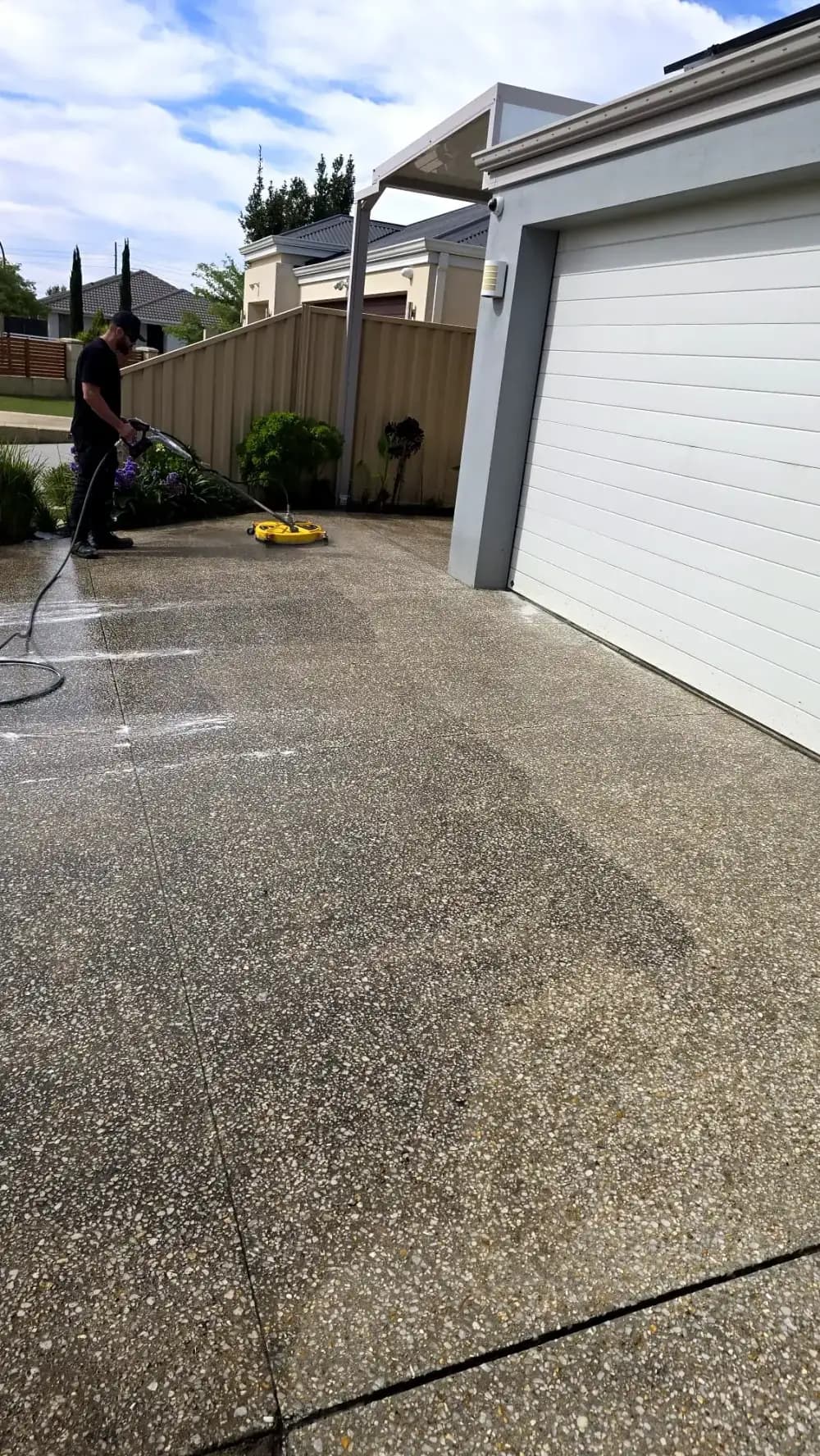
Honed concrete and exposed aggregate both look their best for years if they’re cleaned and resealed properly. Get the method wrong, though, and a simple clean can leave you with etched paste, loose stones or a sealer that turns white within weeks.
This guide covers how to clean each finish, how to reseal it, and how to tell when a stain is beyond washing and needs to be honed out.
Why concrete needs resealing in Perth
Sealers don’t last forever, and Perth conditions are hard on them. Strong UV breaks down topical sealers, hot surfaces speed up wear, and bore water reticulation leaves rust staining on unprotected concrete. Coastal properties also deal with salt air.
As a general guide, topical acrylic sealers on driveways and outdoor areas often need recoating every 2 to 3 years. Penetrating sealers usually last longer, but they still lose effectiveness over time. The surest sign it’s time to reseal is water no longer beading on the surface, or the finish looking dull, patchy or stained.
Step 1: Work out what’s already on the surface
Before you clean or reseal anything, find out what sealer is already there. This affects how you clean and which new sealer will bond.
- Topical sealer (acrylic, polyurethane, epoxy): forms a film on top. Usually has a sheen or wet look, and you may see it peeling or wearing in traffic areas.
- Penetrating sealer (silane, siloxane, silicate): soaks into the concrete. The surface looks natural and unchanged, but water beads on it while it’s still working.
- No sealer, or sealer worn out: water darkens the concrete and soaks in quickly.
A quick test is to drip some water on a few spots, including high-traffic areas. If it beads, there’s still protection. If it darkens and soaks in, the sealer has worn through there. If you’re unsure what type of topical sealer was used, ask the original installer or test a small hidden area before committing to a product. Putting an incompatible sealer over an old one is one of the most common causes of peeling and whitening.
Step 2: Pressure washing honed concrete
Honed concrete has been ground back to expose a smooth, fine finish. That finish is the whole point, so cleaning should protect it.
- Use a rotary surface cleaner rather than a bare wand where possible. It gives an even clean without stripes.
- Keep pressure moderate and the nozzle moving. Too much pressure held in one spot can open up the surface and leave visible marks.
- If the honed surface has a topical sealer, you’re cleaning the coating, not the concrete. Harsh chemicals or high pressure can damage or partly strip it, leaving a patchy finish.
- If it has a penetrating sealer, the surface itself takes the wear. Use a pH-neutral cleaner suited to sealed concrete.
- Avoid acid-based cleaners on honed concrete. Acid etches the cement paste and leaves dull marks that can only be fixed by honing.
Step 3: Pressure washing exposed aggregate
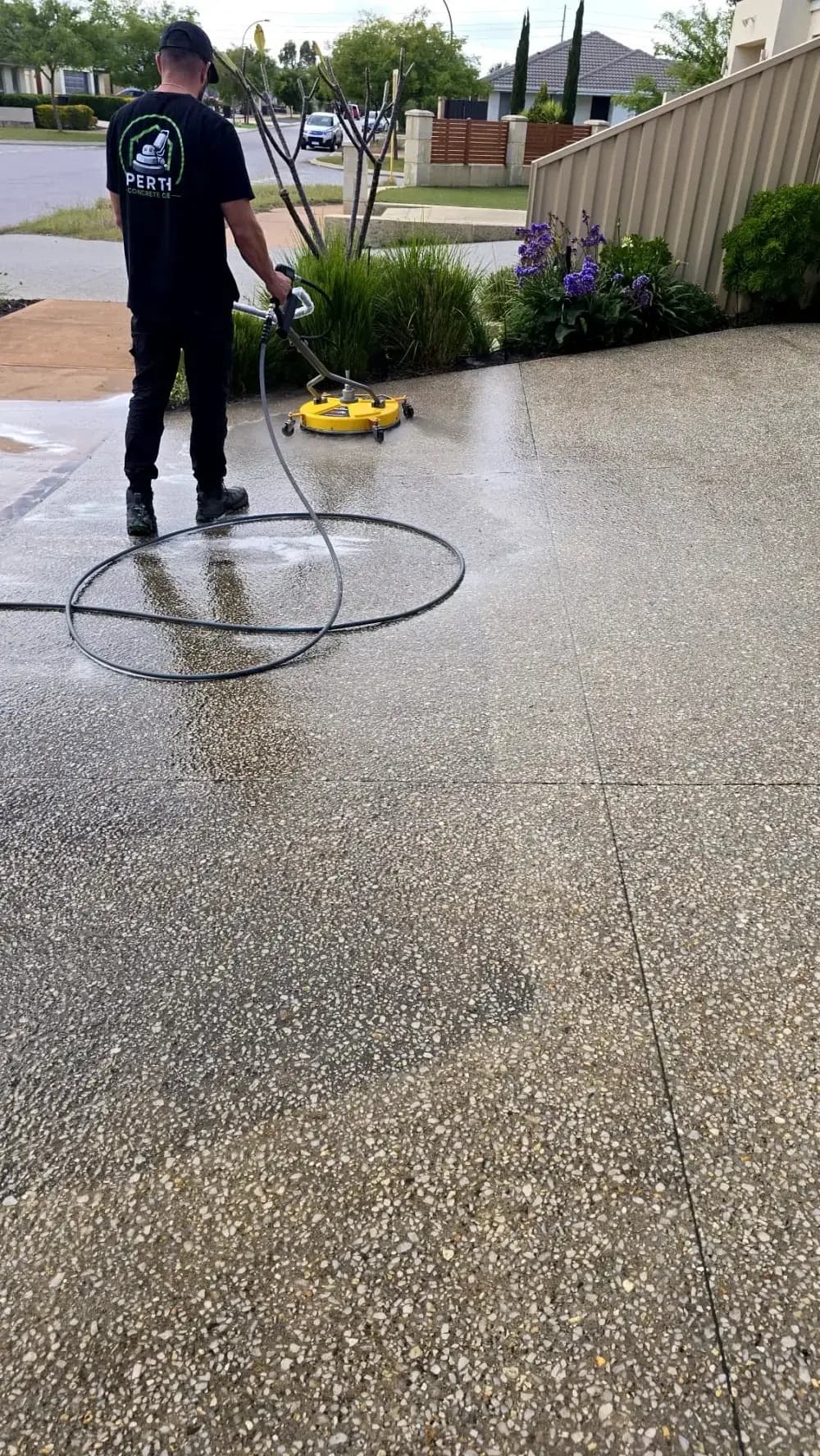
Exposed aggregate can usually handle firmer cleaning than honed concrete, but it still has limits.
- The stones are held in by cement paste. Too much pressure, especially along edges, joints and old cracks, can wash paste out and loosen stones.
- Check the condition before you start. Older or poorly finished aggregate may already have weak spots.
- A surface cleaner gives a more even result than a wand on driveways and paths.
- Treat mould, algae and black spots with a suitable cleaner and allow dwell time, rather than blasting them off with pressure.
If the existing sealer is failing, peeling or white, read Why Has My Exposed Aggregate Sealer Turned White? before you reseal. Sealing over a failed coat rarely ends well.
Step 4: Deal with stains before sealing
Sealing locks in whatever is on the surface, so stains need to be treated first. Some respond well to cleaning products:
- Fresh oil and tyre marks: a concrete degreaser or poultice.
- Mould, algae and black spots: a soft wash cleaner with proper dwell time.
- Leaf and tannin stains: an oxygen-based cleaner.
- Light bore water rust: a dedicated rust or bore stain remover. See How to Remove Bore Water Stains from Concrete.
- White powdery deposits (efflorescence): identify the cause first. Acid-based removers can work on some surfaces but will etch honed concrete, so never use them there without testing.
Other stains won’t come out with chemicals at all, because they’re either too deep or they’re physical damage rather than a stain. Etching, paint drips, burns and old soaked-in oil usually need mechanical restoration. See Concrete Stains That Need Honing Out, Not Chemicals.
Not sure what you’re dealing with?
Send us a photo and we’ll tell you whether it’ll clean up or needs honing. Call 0448 483 226 or email sales@perthconcretecare.com.au.
Step 5: Let it dry properly
Sealing damp concrete is a leading cause of white, cloudy sealer. There’s no single drying time that suits every job. It depends on the sealer, the weather, shade, and how porous the slab is.
Follow the sealer manufacturer’s requirements for surface moisture and conditions. As a rule, the surface should look fully dry and even in colour, with no darker damp patches, especially in shaded areas and along joints. Avoid sealing when rain or heavy dew is likely before the sealer cures.
Step 6: Resealing
Choosing a sealer
| Sealer type | Look | Typical use | Notes |
|---|---|---|---|
| Solvent-based acrylic | Wet look, enhanced colour | Exposed aggregate driveways and paths | Popular for washed agg; can whiten if moisture is trapped or application is poor |
| Water-based acrylic | Satin or low sheen | Lower-odour option, some indoor areas | Usually less colour enhancement than solvent-based |
| Penetrating (silane/siloxane) | Natural, no sheen | Honed concrete, areas where slip resistance matters | Repels water and stains without a film; longer lasting |
| Polyurethane or hybrid | Gloss or satin, tough film | High-wear areas | More durable, more involved to apply and remove |
Application tips
- Make sure the new sealer is compatible with what’s already on the surface.
- Apply thin, even coats. Heavy coats trap solvent and moisture and are a common cause of whitening and bubbling.
- Apply in the cooler part of the day. Sealing hot concrete in full sun can cause bubbling and poor bonding.
- For pool surrounds, alfresco areas and sloped driveways, add an anti-slip additive to topical sealers. Gloss sealers can be very slippery when wet.
- Keep foot traffic off until the sealer is touch dry, and cars off for the time the manufacturer specifies.
When pressure washing isn’t enough
Cleaning and resealing work well when the surface is basically sound. They won’t fix:
- Stains that have soaked deep into the concrete
- Acid etching, swirl marks or patchy damage from previous cleaning
- Topical sealer that’s peeling, bubbling or built up in layers
- Uneven, worn or dull honed finishes
- Paint, render or epoxy spills
In these cases the surface needs to be stripped, ground or honed back to sound concrete before resealing. On honed concrete, that usually means re-honing to restore an even finish. On exposed aggregate, grinding changes the look, cutting the stones flat to create a honed aggregate finish, so it’s a finish choice as much as a repair.
Maintenance intervals
| Task | How often |
|---|---|
| Sweep and rinse | As needed |
| Light wash with pH-neutral cleaner | Every 6 to 12 months |
| Check sealer (water bead test) | Every year |
| Reseal topical acrylic | Every 2 to 3 years |
| Reseal penetrating sealer | As per manufacturer, usually longer |
Bore water areas need more frequent checks. Adjust reticulation so it doesn’t spray onto concrete where possible.
Need your concrete restored rather than just cleaned?
Perth Concrete Care specialises in honing, grinding and resealing across the Perth metro area. For a straightforward clean and seal, ask about our water pressure cleaning service. Either way, send a few photos and we’ll give you honest advice and a fixed written quote.
Frequently asked questions
Can I pressure wash honed concrete?
Yes, with care. Use moderate pressure, keep the nozzle moving, and avoid acid cleaners. Too much pressure held in one spot, or the wrong chemicals, can damage the honed finish in a way that only re-honing will fix.
How often should exposed aggregate be resealed?
Most acrylic-sealed exposed aggregate in Perth needs resealing every 2 to 3 years. Check by dripping water on the surface in a few spots, including the traffic areas. If it soaks in and darkens rather than beading, it's time.
Can I reseal over old sealer?
Only if the old sealer is sound and the new one is compatible with it. If the old coat is peeling, white or built up in layers, it usually needs stripping back first. Putting an incompatible sealer over an old one is one of the most common causes of peeling and whitening.
Why did my new sealer go white?
Usually trapped moisture, a coat applied too heavily, or an incompatible product over the old sealer. Sealing concrete that hasn't fully dried is the single biggest cause. Our guide on white exposed aggregate sealer walks through each cause and fix.
Will honing remove every stain?
Not always. Honing removes stains in the top layer of the concrete. Very deep stains, like oil that has soaked in over years, can go further than is practical to grind. We assess on site and tell you honestly what honing will and won't fix.