Why Has My Exposed Aggregate Sealer Turned White?
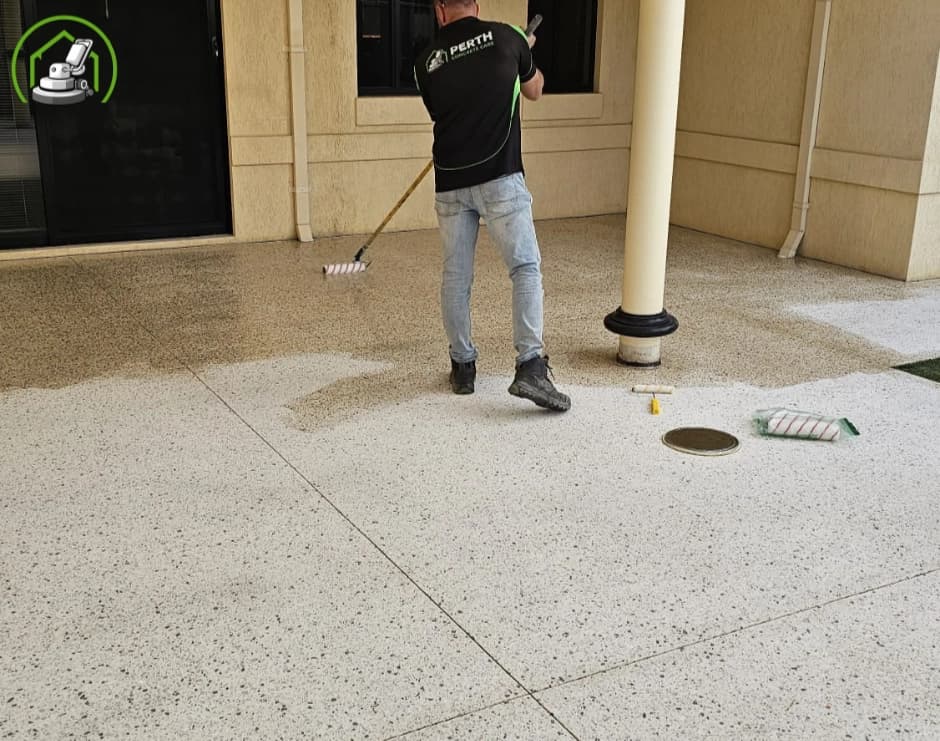
White, cloudy or milky patches in an exposed aggregate sealer are one of the most common complaints we see. The cause is usually moisture, but not always, and the fix depends on which problem you have.
Some white sealer can be revived without stripping. Some has failed and needs to come off.
Common causes at a glance
| Cause | What it looks like | Usual fix |
|---|---|---|
| Moisture blush | Milky or hazy patches, often after rain or in shaded areas | Sometimes revived with solvent if it's a solvent-based acrylic |
| Sealed while damp | Cloudiness soon after sealing, worst at low points and joints | Strip and reseal once fully dry |
| Coat too heavy | White, cloudy or bubbled areas where sealer pooled | Revive if minor; strip if severe |
| Incompatible products | Whitening, peeling or poor bond after recoating | Strip and reseal with a compatible system |
| Sealer breakdown | Flaky, chalky, worn patches, often in sun and traffic areas | Clean, strip if needed, reseal |
| Efflorescence | White powdery deposits, can come through or under the sealer | Diagnose the moisture source; strip and treat |
Moisture blush
Acrylic sealers are slightly permeable. If moisture gets trapped under or within the coating, it scatters light and looks white. This often shows up after heavy rain, in shaded areas that stay damp, or where water sits on the surface.
On solvent-based acrylic sealers, a light application of a compatible solvent or a solvent-based reseal can sometimes re-melt the coating and release the trapped moisture, clearing the haze. This only works on solvent-compatible acrylics. It won’t fix water-based sealers, polyurethanes, or coatings that have genuinely failed. Always test a small area first.
Sealed while damp or applied too heavily
If whitening appeared within days or weeks of sealing, the cause is usually application. Concrete that hadn’t dried enough, or sealer that was put on too thick, traps moisture or solvent under the film.
Minor cases may respond to solvent revival. Widespread whitening usually means stripping the sealer, letting the concrete dry fully, and resealing with thin coats.
Sealer gone white?
Send us a photo and we’ll tell you whether it can be revived or needs stripping. Call 0448 483 226 or email sales@perthconcretecare.com.au.
Incompatible products
Putting a new sealer over an old one that’s a different type can cause whitening, peeling and poor adhesion. For example, some water-based products don’t bond well over solvent-based acrylics. If you don’t know what was used originally, the safest approach is to test first or strip back to bare concrete.
Efflorescence
Sometimes what looks like white sealer is actually efflorescence: mineral salts carried to the surface by moisture moving through the slab. It’s usually powdery rather than cloudy, and it can form under the sealer.
Efflorescence needs diagnosing before treatment. Acid-based efflorescence removers can work on some surfaces, but they can also etch and change the look of the concrete. If it keeps coming back, there’s an ongoing moisture source that needs addressing.
Revive or strip?
- Revive may work when the sealer is solvent-based acrylic, still well bonded, and the whitening is a haze rather than flaking.
- Strip and reseal is usually needed when the sealer is peeling, bubbled, built up in layers, an unknown or mixed system, or when revival hasn’t worked.
Stripping exposed aggregate takes care. The stripper and pressure need to remove the coating without washing out paste or loosening stones. If the surface underneath has suffered too, mechanical restoration with honing and resealing can reset it completely.
Preventing it next time
- Make sure the concrete is fully dry before sealing, following the sealer manufacturer’s requirements.
- Apply thin, even coats and avoid puddling.
- Seal in the cooler part of the day, not on hot concrete in full sun.
- Use a sealer compatible with what’s already there.
- Keep sprinklers and downpipes from dumping water on the surface.
For the complete process, see Cleaning and Resealing Honed and Exposed Aggregate Concrete.
White, patchy or peeling sealer in Perth?
We diagnose, strip and reseal exposed aggregate across the Perth metro area, and where the surface itself has been damaged we hone it back to an even finish. Send a few photos and we’ll tell you which problem you have and what fixing it costs.
Frequently asked questions
Will white sealer go away on its own?
Light moisture blush sometimes clears as the surface dries out in warm weather. If the whitening persists for more than a few warm, dry days, it needs treatment.
Can I just put another coat of sealer on?
Only if you know the existing sealer type and it's still sound. Recoating over a failed or incompatible sealer usually makes things worse, because you're trapping the problem under another film.
Do I need to strip my sealer?
If it's peeling, flaking, bubbled or the whitening won't revive with solvent, yes. Stripping exposed aggregate takes care, because the stripper and pressure need to remove the coating without washing out cement paste or loosening stones.