Warehouse Floor Dusting? Here's How to Stop It for Good
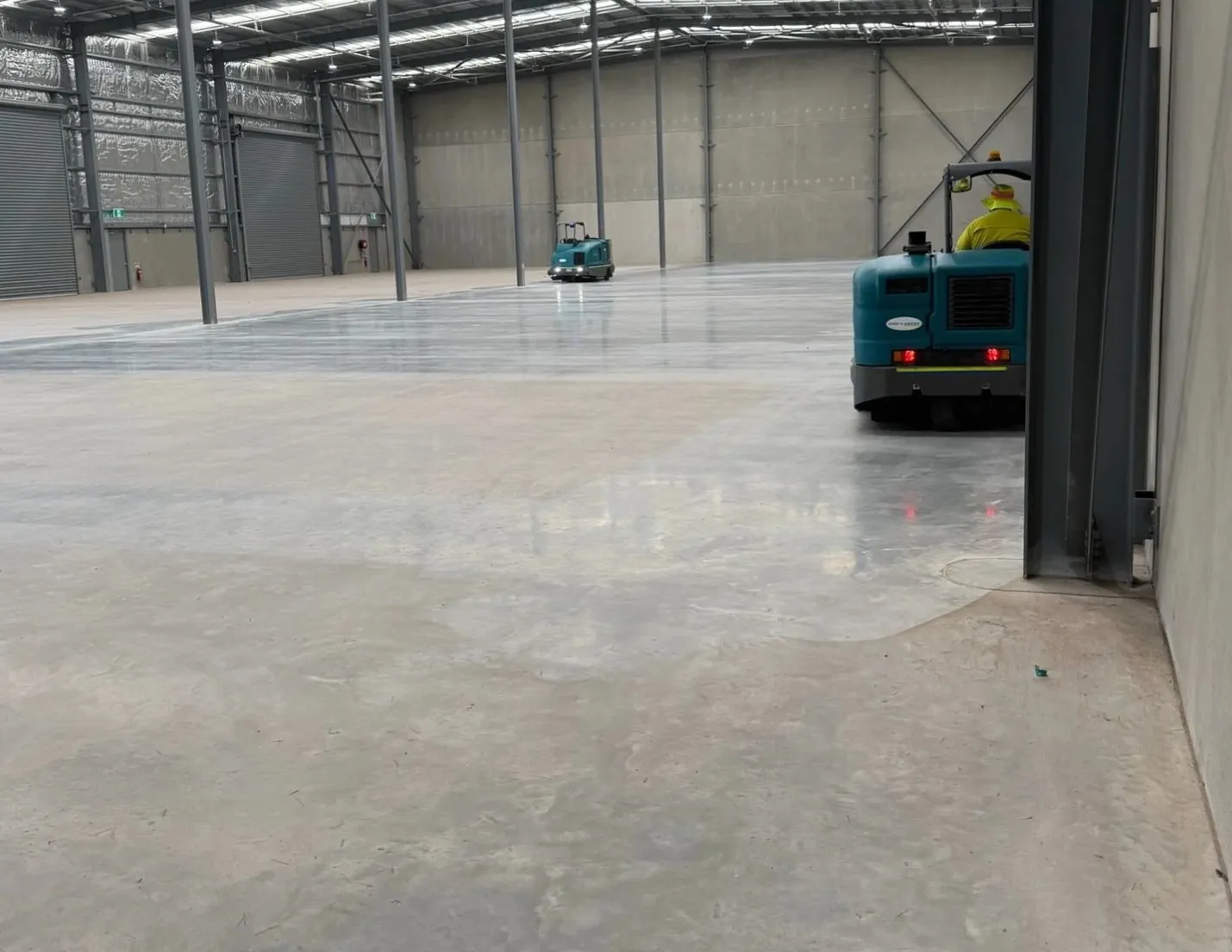
Warehouse managers across Perth contact us with the same frustrating problem. A fine grey dust keeps settling on stock, shelving, machinery and work benches, and no matter how often the floor is swept, it always comes back.
The dust usually isn't being tracked in from outside. It's coming off the concrete slab itself.
The good news is that in most cases the answer isn't replacing the floor or installing an expensive coating. By properly preparing the concrete, strengthening it with a densifier and protecting it with a penetrating sealer, dusting can be dramatically reduced while extending the life of the slab.
Why warehouse floors produce dust
Concrete is strong, but the surface of a slab is its weakest point. Rubber forklift tyres generate enormous abrasion over thousands of passes every week. Every turn, brake and acceleration creates friction against the slab, and that constant wear slowly breaks down the cement paste near the surface into fine powder. Sweeping removes today's dust. It doesn't stop tomorrow's. Until the concrete itself is strengthened, the slab just keeps making more.
There's also a health side to this. Concrete dust contains crystalline silica, the same material behind the silica regulations that reshaped the stone benchtop industry. Airborne levels vary from site to site, but a floor that constantly sheds silica dust into the workplace is worth taking seriously as a safety issue, not just a housekeeping one.
Rather than covering the problem with a surface film, the better starting point is usually strengthening the concrete itself.
Step 1: Auto scrubbing the floor
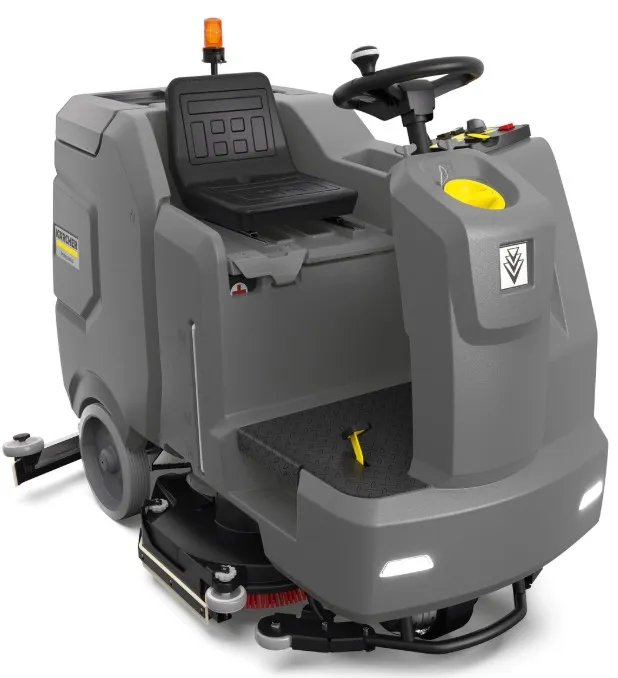
Every job starts with a thorough mechanical clean using an industrial auto scrubber. This strips off years of accumulated dust, tyre marks, oils and embedded grime.
This step matters more than most people realise. Plenty of floors improve dramatically after a proper industrial scrub alone. Just as importantly, we can't assess the actual condition of the concrete until the contamination is off it. A floor that looks badly dusted is sometimes just carrying years of grime, while a floor that looks fine can turn out soft underneath. Only after a proper clean can the right treatment be recommended.
Step 2: Mechanical grinding, when required
Not every warehouse needs grinding. If the slab is sound and simply dusting from surface wear, it can often go straight from scrubbing to densification.
But if the floor is carrying old curing compounds, previous sealers, contamination or weak surface concrete, a light diamond grind may be recommended. Grinding removes the weak material and opens the pores of the concrete so the densifier can penetrate deeper and react more effectively.
Every slab is different, which is why preparation should always be based on the condition of the floor rather than a one size fits all approach. We'll tell you straight either way.
Step 3: Concrete densification
This is where the dusting actually gets fixed. A concrete densifier is a silicate based liquid that soaks into the slab and reacts with the free lime in the concrete to form additional calcium silicate hydrate, the same compound that gives concrete its strength in the first place.
In plain terms, it converts the soft chalky material near the surface into hard concrete. The slab becomes denser, harder and far more resistant to abrasion, so forklift traffic stops wearing it into powder.
Choosing the right densifier
You'll see sodium, potassium and lithium silicates on the market. Sodium was one of the earliest densifiers used and is the budget option, but it can leave white residue and is rarely specified on modern floors. Lithium reacts quickly, leaves very little residue, and is commonly specified on polished concrete and dense burnished floors where residue matters.
For open industrial warehouse slabs, we commonly use a potassium silicate densifier. It penetrates deep into porous industrial concrete, builds excellent hardness and offers outstanding value at warehouse scale. The right densifier is the one matched to the condition, density and porosity of your slab, not the most expensive one on the shelf, and that's an assessment we make on site.
Step 4: Penetrating concrete sealer
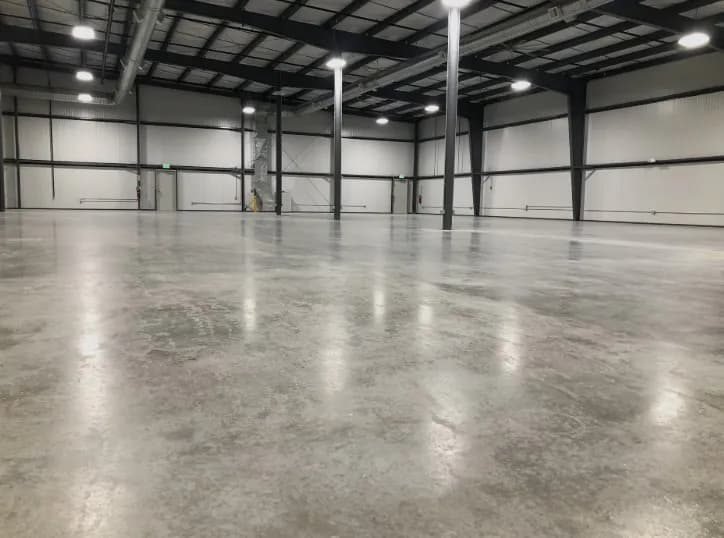
Once the slab is densified, we protect it with a penetrating sealer. Unlike acrylic, epoxy or polyurethane coatings, penetrating sealers soak into the concrete rather than forming a film on top.
For a warehouse, that means there's nothing to peel, flake or delaminate under forklift traffic. The concrete still breathes, but the sealer reduces liquid absorption, so oils and spills sit at the surface where they can be cleaned up instead of soaking in and staining. The floor becomes easier to clean and stays cleaner between scrubs, with far less maintenance than a surface coating.
Optional step: burnishing
Depending on the specification and the finish required, the floor can then be burnished with a high speed burnisher. The heat and friction close the surface further, refine the profile and tighten the finish, improving both durability and appearance. Not every warehouse needs this step, but on suitable floors it adds real benefit.
Why we don't automatically recommend coatings
Epoxy, polyurethane and other resin coatings absolutely have their place. We regularly install epoxy flooring where customers need chemical resistance, line marking, decorative finishes or coloured floors.
But if the objective is simply to stop a slab from dusting, strengthening the concrete itself is often the more practical and economical long term solution. Surface coatings in high traffic forklift environments will eventually scratch, wear or need replacement, particularly in turning zones. A densified and sealed floor is harder from within, with no film to fail.
What you'll notice afterwards
Warehouse managers usually notice:
- Less dust settling on stock and racking
- Cleaner machinery and work benches
- Far less time spent sweeping
- Easier, more effective auto scrubbing
- A noticeably harder, tighter slab surface
- Better long-term durability under forklift traffic
For many facilities, the biggest saving isn't the treatment itself. It's the reduction in ongoing cleaning, dust contamination and maintenance. For most warehouses, the treatment pays for itself in reduced operating costs over the life of the building.
We do this work right across Perth's industrial areas, including Wangara, Malaga, Osborne Park and Canning Vale.
Need help with a dusty warehouse floor in Perth?
Every warehouse is different. Some floors only need a thorough scrub and densifier. Others benefit from a light grind first. Send your approximate floor area, a few photos of the slab and a rough idea of how the space is used, and we'll give you honest advice on the best approach.
Frequently asked questions
Why does my warehouse floor keep producing dust?
The dust is the surface of the slab itself breaking down. Forklift tyres generate enormous abrasion over thousands of passes a week, and that constant friction wears the cement paste near the surface into fine powder. Sweeping moves it around, and the slab keeps making more until the surface is strengthened.
Is concrete dust in a warehouse a health risk?
It can be. Concrete dust contains crystalline silica, the same material behind the silica regulations that reshaped the stone benchtop industry. Airborne levels vary from site to site, but a floor that constantly sheds silica dust into the workplace is worth treating as a safety issue, not just a housekeeping one.
Do I need an epoxy coating to stop the dusting?
Usually not. If the objective is simply to stop a slab dusting, strengthening the concrete itself with a densifier and penetrating sealer is often the more practical, economical long-term fix. Coatings still have their place where you need chemical resistance, line marking or colour, but in high-traffic forklift zones a film will eventually scratch or wear, while a densified floor is harder from within with no film to fail.
What does a concrete densifier actually do?
It's a silicate-based liquid that soaks into the slab and reacts with the free lime in the concrete to form additional calcium silicate hydrate, the same compound that gives concrete its strength. In plain terms, it converts the soft chalky material near the surface into hard concrete, so forklift traffic stops wearing it into powder.
Can the warehouse stay operational during the work?
Usually, yes. We can stage the treatment area by area and work around your operation, and there's no thick coating cure time locking the floor out for days. We plan timing with you so downtime is minimal.
How much does warehouse floor dust treatment cost in Perth?
It's quoted on area and condition, because a sound slab that needs a scrub and densifier is a very different job to one carrying old curing compounds that needs a grind first. Send your approximate floor area, a few photos and how the space is used, and we'll come back with honest advice and a fixed written price.