Honed Concrete vs Polished Concrete vs Exposed Aggregate: What’s the Difference?
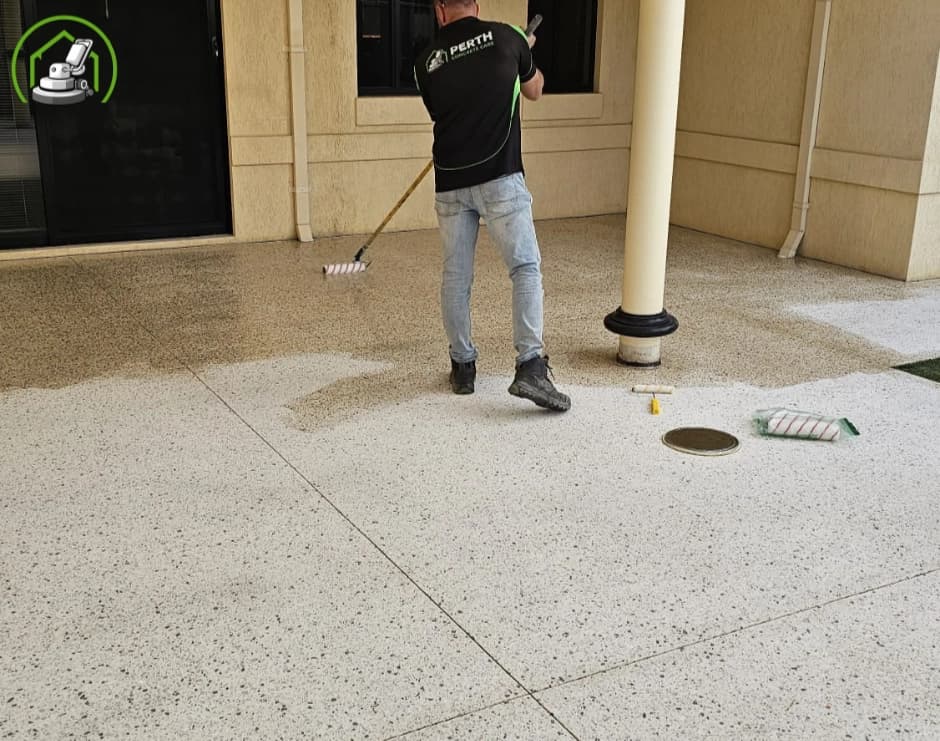
If you’ve started getting quotes for a concrete finish in Perth, you’ve probably heard the terms honed concrete, polished concrete and exposed aggregate used almost interchangeably. They’re not the same thing, and choosing the wrong one for the spot you have in mind is one of the more expensive mistakes we get called out to fix.
All three show off the stone inside the concrete, but they’re prepared differently, they suit different parts of a property, and they behave very differently underfoot and in Perth’s climate. This guide explains how each finish is actually made, where it works best, and how to pick the right one. It’s written from what we see day to day grinding, honing and coating floors across the Perth metro area.
What is honed concrete?
Honed concrete is a mechanically ground finish. We grind the cured slab with progressively finer diamond tooling, stepping up through the grits, to cut back the top surface and expose the sand and stone within the concrete, then seal it. How much stone shows comes down to how deep we grind: a light “cream” grind barely opens the surface, while a deeper cut gives a salt-and-pepper or full-aggregate look.
The key point for Perth: honed concrete is built for outdoors. We finish it to a slip rating (commonly P3 to P5 depending on the sealer and any added grip) so it stays safe around water, and we use UV-stable sealers so it doesn’t yellow or break down in the local sun. It’s ideal for pool surrounds, alfrescos, patios, courtyards, paths and outdoor entertaining areas.
People choose it because it keeps a natural stone look but feels smooth and comfortable on bare feet, it hoses down easily, and a correctly sealed honed surface holds up well to Perth summers. The honest trade-offs: it needs professional grinding gear and costs more up front than leaving raw concrete, and because we’re exposing whatever stone the original pour used, the colour and aggregate can vary from slab to slab. We always check the slab before quoting so there are no surprises. See our honed concrete in Perth page for the full process.
What is polished concrete?
Polished concrete is the indoor cousin. The early grinding stages look similar to honing, but instead of stopping at a matte honed surface we keep going. We work through fine resin-bond diamond pads, often up to the 1500 to 3000 grit range, usually with a lithium densifier to harden the surface and a guard to protect it, until the floor takes on a sheen. You can dial the gloss anywhere from a soft satin to a near-mirror finish.
It suits living rooms, kitchens, hallways, retail floors, showrooms and warehouses. It works anywhere indoors that wants a hard-wearing, low-maintenance floor that reflects light and opens the space up. It’s extremely durable (it’s essentially a hardened version of the slab you already own), there’s no grout or carpet to stain, and it wipes clean.
The honest trade-off is slip: a high-gloss polish can get slippery when wet, so it’s not what we recommend right around a pool. Properly finished with the right guard, indoor polished concrete can still meet slip requirements, but outdoors, hone-and-seal is the safer call. More detail on our polished concrete page.
What is exposed aggregate?
Exposed aggregate is different from the other two because it happens at the pour, not afterwards. While the concrete is still green, a surface retarder is applied and the top layer of cement “cream” is washed off the next day to reveal the decorative stones underneath, which is why it’s sometimes called washed aggregate. Crucially, it isn’t ground or refined after exposure, so the texture you get is the texture of the stones themselves.
It’s been a Perth default for residential driveways, crossovers, footpaths and front entrances for decades. People choose it because it’s affordable compared with honing, the exposed stone gives excellent grip for cars and feet on a slope, and there’s a huge range of local aggregate blends to pick from. The trade-offs are the flip side of that texture. It can feel rough or sharp underfoot, the peaks and valleys trap dirt, and it’s harder to clean than a honed surface. That roughness is exactly why so many Perth homeowners later ask us to hone it back.
Honed concrete vs exposed aggregate: the one people mix up
These two get confused the most, because both show the stone. The real difference is what happens after the stone is exposed:
- Exposed aggregate is left with its natural, as-cast texture.
- Honed concrete is ground and refined after exposure, taking the high points off the stone.
In practice, honed concrete feels smoother, cleans more easily and reads as a more premium, modern finish, while exposed aggregate costs less and grips harder. For a driveway on a slope, that grip is a feature. For a pool surround or alfresco where people walk barefoot, the smoother honed surface usually wins.
Can existing exposed aggregate be honed?
Yes, and it’s one of our most-requested jobs around Perth. If you’ve got a rough exposed-aggregate patio, pool surround or driveway that’s hard on bare feet, we can grind back the high points of the stone to leave a smoother, flatter, more refined surface while keeping the decorative aggregate look. You get most of the comfort and cleanability of a fresh honed slab without the cost of ripping out and re-pouring.
It’s especially popular around swimming pools, alfrescos, courtyards and entertaining areas in suburbs like Scarborough and Mindarie. We assess the existing slab first. If it’s sound, honing and resealing is usually far cheaper than replacement.
Which finish is best around pools?
For pool surrounds, honed concrete (or hone-and-seal over existing aggregate) is almost always the right answer. It gives barefoot comfort, reduces trip hazards from sharp stone, looks clean and modern, and most importantly it can be sealed to a high slip rating so it stays safe when wet. A polished, glossy surface is the opposite of what you want next to water.
Which finish is best for driveways?
For most residential driveways, exposed aggregate is still one of the most cost-effective choices: strong traction, good durability and plenty of design flexibility. That said, homeowners chasing a more refined look increasingly ask us to hone an exposed-aggregate driveway for a smoother, premium finish that’s easier to keep clean. Both are valid. It comes down to budget and the look you’re after.
Cost comparison
Pricing always depends on the slab’s condition, the aggregate, the area and access, but as a rough Perth guide:
| Finish | Typical cost | Best for |
|---|---|---|
| Exposed aggregate | Lowest (done at the pour) | Driveways, paths |
| Hone & seal | from $60 to $100/m² | Pools, alfrescos, outdoor |
| Polished concrete | $140 to $220/m² | Indoor living & commercial |
So which finish should you choose?
The short version:
- Honed concrete for pool surrounds, outdoor entertaining and any barefoot area where you want a premium, low-maintenance, slip-rated finish.
- Polished concrete for indoor living areas and commercial floors that want a durable, light-reflecting surface.
- Exposed aggregate for driveways and budget-friendly decorative concrete where maximum grip matters.
Still not sure? That’s genuinely the most common reason people call us, and we’ll happily tell you if a cheaper option will do the job. If your slab needs prep first, that side of it is covered on our concrete grinding page.
Not sure which finish suits your place?
Send a photo of your slab or area with rough measurements and we’ll recommend the right finish. It’s a free, no-obligation assessment from the person who does the work.
Frequently asked questions
Is honed concrete slippery?
Not when it's finished correctly. Honed concrete is the finish we recommend for outdoor and wet areas precisely because it can be sealed to a slip rating of P3 to P5, depending on the sealer and any added anti-slip grip. The slippery one is a high-gloss polished floor, which is why we keep that finish indoors.
Can polished concrete be used outdoors or around a pool?
We don't recommend it. A polished, high-gloss surface gets slippery when wet and the gloss can suffer under constant UV. For pool surrounds, alfrescos and driveways we use honed concrete or hone-and-seal, which give a slip-rated, UV-stable finish built for Perth conditions.
Can you hone my existing exposed aggregate driveway or patio?
Usually, yes. It's one of our most common jobs. If the slab is sound, we grind back the high points of the stone to leave a smoother, flatter surface that keeps the decorative aggregate look but is far kinder on bare feet and easier to clean. It's much cheaper than tearing out and re-pouring.
How much does honed concrete cost in Perth?
As a guide, hone-and-seal finishes start from $60 per square metre, a slab poured to be honed runs around $75, and honing existing exposed or washed aggregate is $80 to $100 because we cut straight into hard stone. Polished concrete sits around $140 to $220 per square metre. Exposed aggregate is cheapest of all because it's created at the original pour. Final pricing depends on slab condition, aggregate type, repairs, access and area, so we confirm it after a site assessment.
What's the difference between exposed aggregate and washed aggregate?
They're the same finish. Both are created by spraying a retarder on fresh concrete and washing off the surface cream the next day to reveal the stone. “Washed aggregate” just refers to that washing step. It's different from honed concrete, which is ground and refined after the slab has cured.